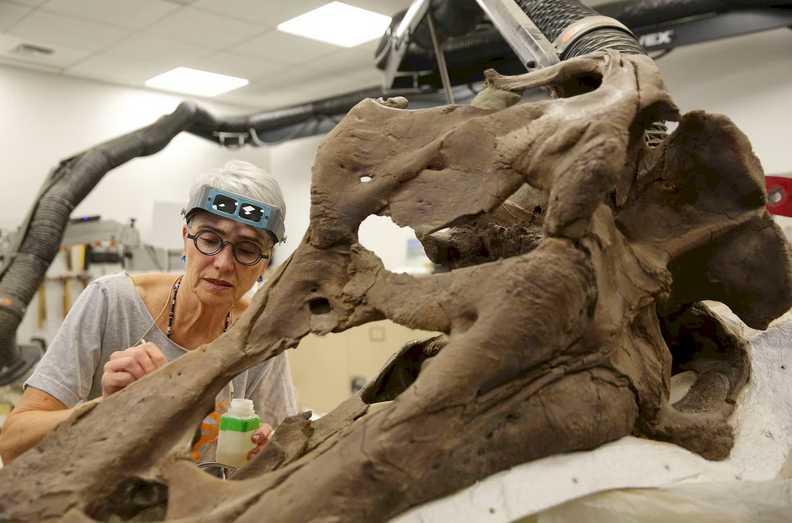
{"post":"Ancient footprints offer rare glimpse into lives of extinct human relatives. A remarkable set of footprints preserved along the shores of Kenya’s Lake Turkana from more than one million years ago is giving scientists an unusually detailed look at how one of humanity’s extinct relatives may have lived, moved and socialized.
The newly published study, appearing in the Proceedings of the National Academy of Sciences, analyzed 21 fossilized footprints left behind by eight individuals belonging to Paranthropus boisei, an ancient human relative that lived alongside Homo erectus during the Early Pleistocene.
In an interview with CTVnews.ca on Monday, lead author and associate professor of biology at Chatham University Kevin Hatala said: “They probably weren’t all there at exactly the same time, but they’re definitely all moving through this space, maybe within hours of each other, or at least within a day or two.”
“We think there’s potentially a group of them who are moving through this area together as well, just based on the orientations of their trackways,” he added. “They seem to be moving in the same direction and at similar speeds too.”
Researchers say footprints provide something fossilized bones rarely can: a snapshot of behaviour captured in a single moment.
“The special thing about footprints, scientifically, is that they preserve an instant in time,” Kay Behrensmeyer, senior research geologist and curator of vertebrate paleontology at the Smithsonian’s National Museum of Natural History, said in a press release issued by the museum. “They also allow people to relate to these fossils much more easily than an isolated piece of bone or jaw.”
The tracks were first discovered in northern Kenya in 1978 after Behrensmeyer noticed what turned out to be a fossilized hippo footprint while colleagues were excavating ancient sediment. The site was later reburied to protect it before researchers returned in 2016 and 2023, uncovering many more footprints preserved in the same layer of rock.
Volcanic ash surrounding the site allowed researchers to date the trackway to about 1.43 million years ago."}
{"post":"Ancient #DNA revealed that our species, Homo sapiens, once interbred with Neanderthals, but what was the nature of those Stone Age encounters tens of thousands of years ago?
Discoveries unearthed in a cave in what’s now Turkiye indicate the two groups did not merely cross paths but may have shared some cultural traditions, making similar tools and collecting the same kind of shell.
“Our findings suggest that Neanderthals and Homo sapiens likely shared more than just the same landscape,” lead author İsmail Baykara said via email, discussing the new research published Monday in the journal PNAS.
“Although we cannot yet prove direct contact, the remarkable continuity in technology, hunting practices, and the transport of bead-seashells is consistent with the idea that these populations interacted and shared cultural traditions over time.”
While archeologists have known about the Üçağızlı II cave in southern Turkiye for some time, the first systematic excavation began in 2020, said Baykara, a professor in the department of archeology at Gaziantep University in Turkiye.
Fossils found in the cave — four individual teeth and a partial jawbone with two teeth still attached — showed that Neanderthals inhabited the cave between 77,000 and 59,000 years ago, with Homo sapiens later occupying the cave between 59,000 years ago and 47,000 years ago. These timeframes were determined by dating the sediment layers in which the fossils were encased.
During that time, the two species made similar flint tools in a style known as Mousterian after the rock shelter in France where the tools were first identified. The two species also hunted the same types of animals, such as wild goats, deer and boars. One of the researchers’ biggest surprises was the discovery of a particular type of shell from the mollusk Columbella rustica, too small to provide sustenance, in both the Neanderthal and Homo sapiens layers.
While some of the C. rustica shells had been perforated, suggesting they could have been ornamental, the study authors described them as “manuports,” or objects transported by a person from their places of origin. Although the mollusk shell has previously been linked exclusively with Homo sapiens, the authors said it is very likely that Neanderthals also valued this seashell.
“Neanderthals deliberately collected and transported this shell from the Mediterranean coast despite many other shell species being available, and modern humans at the site also collected Columbella rustica,” said study coauthor Naoki Morimoto, a researcher at Kyoto University in Japan.
Out of #Africa
The Üçağızlı II cave is one of only a handful of known sites that date back to a pivotal but little-known period in the human story.
Around 60,000 years ago, a sweeping migration of our species out of Africa ultimately led to modern humans residing in every corner of the globe, with a few pioneering groups leaving the continent much earlier. Scholars think that during this larger migration modern humans likely encountered and interbred with Neanderthals in places such as modern-day Turkiye.
However, this hypothesis comes mainly from population patterns modelled from DNA sequences. Direct archaeological evidence from this critical period in the Levant, the region that now roughly equates to the Middle East and Turkiye, is scarce and fragmentary. It’s not clear, the new study noted, whether the Homo sapiens who sheltered in the cave were part of this major wave of migration or the descendants of the early pioneers.
Ludovic Slimak, an archeologist at the French National Centre for Scientific Research (CNRS) and the author of the “The Last Neanderthal: How Humans Die,” said the cave represented “a very important discovery,” demonstrating that modern humans did not necessarily arrive on the scene and replace Neanderthals with a new and superior culture.
“To me, the most important point is not simply that Neanderthals and modern humans used similar tools or collected similar shells,” he noted in an email.
“What is much more interesting here is that, within the chronological range of the Homo sapiens layer, modern humans appear to be involved in a deeply local, well-rooted Mousterian tradition.”
Slimak said the site provided a fascinating contrast to Grotte Mandrin, an archeological site in southern France where Neanderthals and Homo sapiens once both lived. Slimak has led excavations at that site.
There, Homo sapiens, who lived in the rock shelter at roughly the same time their counterparts occupied the cave, used very different stone tools, perhaps even bow-and-arrow technology, that were much more finely crafted than the bulkier Mousterian tools found in the Neanderthal layer at Grotte Mandrin and used by both species at Üçağızlı II.
“The two sites do not tell the same story,” Slimak said. “Together, they suggest a much more complex picture, with multiple Homo sapiens populations, multiple cultural trajectories, and probably several waves of expansion, interaction, disappearance and replacement.”
Baykara added that more archaeological evidence is needed to understand whether the Üçağızlı II cave was an outlier or not.
“This unique situation suggests that culture is shaped not only by biology but also by local traditions, allowing different species in the same region to maintain shared behaviors for thousands of years,” Baykara said.
By Katie Hunt, CNN"}
{"post":"#Archeologists in #Israel have discovered a cave used by pre-Neanderthal human-like creatures who lived as long as 400,000 years ago, making it one of only a handful of sites from the little-known period accessible to scientists.
Located on the outskirts of a town called Fureidis in northern Israel, the cave was due to be affected by construction work when archeologists decided to investigate it.
Researchers in the 1970s originally thought the cave was used around 200,000 years ago, archeologist Kobi Vardi of the Israel Antiquities Authority told CNN on Thursday.
However, Vardi and his colleague Ron Shimelmitz, an associate professor in archeology at the University of Haifa, have now discovered that it was inhabited up to 400,000 years ago.
They determined this after finding flint tools, such as hand axes, scrapers and blades, that are characteristic of the Acheulo-Yabrudian culture of pre-Neanderthal hominins who lived in the area at the time.
Vardi told CNN that “it was a big surprise” to find that the cave was much older than previously thought. It would have been used by members of the Acheulo-Yabrudian culture, who inhabited the Levant, or the Near East, around 400,000-250,000 years ago.
The team also found bones from animals such as fallow deer and gazelle.
This suggests large groups of hominins lived together in the caves, hunting wild animals and using fire, “suggesting complex and rich camp life,” Shimelmitz said in a statement published by Israel’s Ministry of Foreign Affairs on June 11.
However, to date no significant human remains have been found in any of the caves that have been discovered from this period.
The cave in Fureidis is “a unique site of global importance,” Shimelmitz said in the statement.
“This time capsule belongs to a unique period at the end of the Lower Paleolithic era, just before Neanderthals and modern humans became dominant and spread across many regions,” he said.
“Only a handful of sites from this important phase have been uncovered in Israel and the wider Levant, and most of them are inaccessible for research,” Shimelmitz added.
The team presented their findings to the construction company, and a road bridge was built to save the cave and keep it accessible for further investigation.
Vardi said researchers are planning extensive studies at the site that will probably take several years.
“Our big hope in the excavation of these caves is that maybe we’ll find hominin remains,” he said. “We’re very anxious to meet them.”
‘Transform our understanding’
Armando Falcucci, a lecturer in palaeolithic archeology at the University of Southampton, England, who was not involved in the study, told CNN that the find adds to our understanding of a period of human history that tends to receive limited attention.
“What makes this find valuable is that it pulls the spotlight back to a much earlier and equally pivotal window (roughly 400,000 to 200,000 years ago); a period of profound behavioural and technological change across both Africa and Eurasia in its own right, including the shift toward intensive, repeated use of caves as central places in the landscape,” he told CNN on Wednesday. He stressed that cave deposits from this period “are extremely rare in the region.”
“The evidence for intensive use of fire at this site is particularly significant,” Falcucci added. “It is during this period, and at sites of exactly this kind, that habitual, controlled use of fire becomes archeologically visible, marking a major behavioural threshold in human evolution.”
Catriona Pickard, a professor of prehistory and archaeometry, and head of archeology, at the University of Edinburgh in Scotland, who was also not involved in the research, said the findings “provide rare insights into the material culture and lifeways of early hominins, and as such, the site has the potential to transform our understanding of the Lower Palaeolithic in the Levant.”
By Jack Guy, CNN"}
{"post":"#Archeologists uncover graves and artifacts at former Mississippi asylum. The excavation, part of the Asylum Hill Project, began in 2022 and has been hindered by Yazoo clay and poor drainage, which have left little preserved over the past 100 years. A construction crew digging for a road initially came across the caskets in 2013.
“We have a few bone fragments, a few teeth, and the nails from the wooden coffin,” said Jennifer Mack, lead archeologist.
The team is working under strict legal and ethical protocols, aiming to eventually reunite the remains with their families. However, records from the 18th and 19th centuries are limited, and families who were not nearby often lacked the means to retrieve their loved ones.
“It seems if the family was not contacted in 24 hours, they were buried in the cemetery,” Mack said.
While death certificates from 1912 to 1935 exist, no cemetery map or markers remain to positively identify the remains. Archeologists noted that the burials appeared to have been conducted respectfully.
“Every single person buried here was in his or her own coffin and in [their] own grave, and they were lined up neatly,” Mack said.
The findings are shedding light on the lives of individuals who lived at a time when mental illness was poorly understood and care for many diagnoses was limited.
“Someone may have depression, but they may have a heart condition, so there were many comorbidities and a lot of elderly people that came here,” said Lida Key, director of the Medical History Museum.
“Most fascinating to me is what demonstrates personal relationships in the asylum,” Mack said.
Artifacts such as coins, jewelry, and makeshift formal clothing have been found in many of the graves, suggesting care and connection.
“That’s not something you do for a random stranger,” Mack said.
“What we have learned is there was good and bad, and we want to learn from that and see what we can learn from mental illness today,” Key said.
UMMC researchers are asking families to share photographs, letters, memories, or stories about loved ones connected to the asylum. With an estimated 7,000 graves on the grounds, much work remains to uncover clues and restore lost names.
Plans are underway to build a mausoleum to house unclaimed remains and showcase possessions found, providing a final resting place and preserving the stories of those buried at the site.
By Allie Ware."}
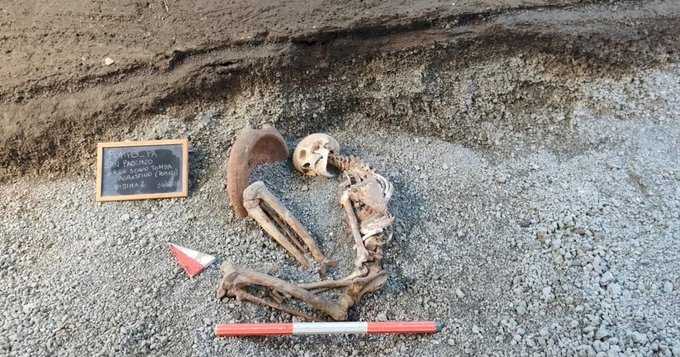
{"post":"#Archaeologists use #AI to generate image of Pompeii victim, Archeologists in Italy’s Pompeii have for the first time used artificial intelligence to reconstruct the appearance of one of the victims of the volcanic eruption that destroyed the ancient Roman city nearly 2,000 years ago.
The AI-generated image, released by the Pompeii Archeological Park on Monday, shows a man ducking for cover while holding a large bowl over his head, with a flaming Mount Vesuvius in the background.
It is based on the recent discovery of the remains of a male adult, just outside one of the southern gates of the city, which were lying next to a terracotta mortar that he presumably used as protection.
Archeologists believe the man was killed by a shower of volcanic rocks, in the early hours of the second day of the eruption, while trying to escape towards the sea. He was also carrying a lamp and 10 bronze coins, the park said.
“If used well, artificial intelligence can contribute to a renewal of classical studies, illustrating the classical world in a more immersive way,” the head of the archeological park, Gabriel Zuchtriegel, said in a statement.
The once-thriving city of Pompeii, about 25 kilometres (15 miles) south-east of Naples, was buried in the eruption of Mount Vesuvius in AD 79, preserving buildings, objects and graffiti under metres of ash.
Rediscovered in the 18th century, it is now one of the world’s most significant archeological sites, and one of the most popular tourist sites in Italy, with 4.3 million visitors in 2024, according to the latest statistics.
Reporting by Alvise Armellini; Editing by Keith Weir."}
{"post":"#Archeological ,The #ancient mountain kingdom where fantasy comes to life, The dense forests, twisting rivers and granite peaks of Northern Ireland’s Mourne Mountains have lived many lives and assumed many names.
They’re Westeros in “Game of Thrones.” They’re “Krypton” in the Superman prequel.
They’re also Transylvania in “Dracula Untold,” Sherwood in the upcoming “Death of Robin Hood,” and the Forgotten Realms in “Dungeons and Dragons: Honor Among Thieves.”
As part of the Mourne Gullion Strangford global geopark, this mountain region in Ireland’s northeast achieved #UNESCO recognition in 2023, but relatively small numbers of international visitors come to explore.
However, the lyrically named Kingdom of Mourne — it was never a sovereign state — has been inspiring imaginations globally for more than 75 years.
This sea-lapped landscape of 220 square miles (570 square kilometres) was the real-life inspiration for “The Chronicles of Narnia,” the enduring 1950s novels by Belfast-born writer C.S. Lewis soon to be revived once again. They’ll get their fourth film adaptation in “Barbie” director Greta Gerwig’s “Narnia: The Magician’s Nephew” later this year.
Small and compact
While Gerwig’s “Narnia” is being filmed in England, Northern Ireland has a booming local film industry. Production of Season 1 and 2 of the new “Game of Thrones” prequel, “A Knight of the Seven Kingdoms,” is estimated to have returned more than US$80 million to the economy alone.
“We are a small and very compact country. In fact, we are effectively the size of Greater Los Angeles, but with about 10 per cent of the population,” says Andrew Reid, chief content officer for Northern Ireland Screen.
Only 1.9 million people live in Northern Ireland, but at any one time there will be 1,200 people hard at work on live-action scripted projects.
Thanks to good road infrastructure, crews can head in any direction from a production base in Belfast and quickly access a diverse range of landscapes — as can the fans and tourists who come to the region in their wake.
“You can be on a beach in the morning,” and back in Belfast in the afternoon, says Reid, or “up a mountain one day,” and then on a river, lake or in a forest the next.
Soft hills and rolling farmland
The coastline north of Belfast, with its windswept vistas reminiscent of the Scottish Highlands, has some of Ireland’s most dramatic scenery, including the world-famous Giant’s Causeway.
An hour south of Belfast, the Mourne Gullion Strangford global geopark is a softer landscape, with rolling hills and shadowy dells in which it’s easy for the mind to conjure up magical beasties.
“I have seen landscapes, notably in the Mourne Mountains and southwards, which under a particular light made me feel that at any moment a giant might raise his head over the next ridge,” wrote C. S. Lewis in his essay “On Stories.”
He was more specific in a letter to his brother Warren, writing, “that part of Rostrevor which overlooks Carlingford Lough is my idea of Narnia.”
The Lewis boys spent childhood vacations in Rostrevor, a neat and gaily painted village, now dotted with literary murals, close to the Northern Irish border.
To its north rise the mountains, richly forested in towering sitka spruce, one of the world’s tallest trees, and at their feet lie the still waters of Lewis’s beloved lough, a glacial ford which opens into the Irish Sea.
Thrown by a giant
Lewis wasn’t the first to dream of giants here. From the village, you can saunter past the Fairy Glen (reputed haunt of the “wee folk”) and climb the mountainside to discover spectacular views and a peculiar 50-ton (45-tonne) boulder perched unexpectedly almost 1,000 feet (about 305 metres) above sea level.
The scientific explanation is that Cloughmore (from the Irish for “big stone”) is a glacial erratic, thought to have originated in Scotland and been deposited here by retreating ice at the end of the last Ice Age.
The mythical version is that it was thrown here from across the loch by Finn McCool, the legendary titan who is also credited with building the Giant’s Causeway some 100 miles (160 kilometres) north.
The Mournes were formed by volcanic activity more than 50 million years ago, in tectonic shifts related to those which formed the Causeway’s basalt columns before it.
It was then sculpted by successive Ice Ages, meaning that the mountains – fittingly for a “Game of Thrones” filming location – are a true “land of fire and ice.”
Santa’s cottage and the ‘magic hill’
North of Rostrevor, in the heart of the mountains, Leitrim Lodge has been a frequent filming location, including as the lands north of Winterfell in Season 2 of “Game of Thrones.” (Winterfell itself is at Castle Ward estate, some 30 miles, or 48 kilometres, northwest).
It’s also where, explains Reid, C.S. Lewis went on family picnics and entertained his young cousins with “little stories about dwarf armies and this, that and the other.”
The farmer’s cottage where Arya and the Hound took refuge in “Game of Thrones” Season 4 is a seven-minute drive away, close to “Santa’s Cottage,” Ireland’s “official residence” of Santa Claus. Father Christmas’s appearance in the Narnia books is a seismic event, but in this Hilltown attraction it’s a calendar staple, every November and December.
Locals also head to the “magic hill” near Spelga Dam to experience an intriguing natural phenomenon. An optical illusion here creates what is sometimes called an electric brae: A parked car with its handbrake off will appear to roll uphill on this quiet side road.
The Mourne Wall
During Lewis’s boyhood, the 20-year Mourne Wall building project began. This epic 22-mile (35-kilometre) boundary, built to keep livestock from polluting water supplies, was constructed using the classic dry-stone technique that characterises the area and was completed in 1922.
The granite bulwark runs like a seam across the peaks and is now a popular hiking route taking in seven of the 10 highest 600-metre-plus mountains in Northern Ireland.
Unlike the famous barrier in “Game of Thrones,” however, there’s no “north of the wall”: This wall runs in a circle.
At 354 metres, Hen Mountain is one of the Mournes’ smaller peaks, but it’s achieved new heights of stardom by appearing in the show poster for “A Knight of the Seven Kingdoms.”
Walking along the well-maintained path through the valley on a spring afternoon, the coconut scent of yellow-flowered whin bushes sweet in the air, I have the whole place to myself. It’s hard to imagine this pristine expanse filled with the crowds and clatter of a full-scale HBO production crew. (HBO is owned by Warner Brothers Discovery, the same parent company as CNN).
“We have a strong sustainability element to our work,” says Reid, which means the mountains are left just as they are found. “We have to be grateful for and respectful of the work groups and individuals have done for decades to keep the Mournes clean and protected.”
Tollymore Forest Park
By far the most popular filming location in the Mournes, appearing in everything from 2025’s “How to Train Your Dragon” to the regrettable medieval stoner comedy “Your Highness,” starring James Franco and Natalie Portman, is Tollymore Forest Park.
It’s not hard to see why. This enchanting 630-hectare state park is filled with stepping stones, 18th-century follies and a total of 16 bridges across the babbling Shimna River.
Above the majestic treeline there are panoramic views of mountain and sea, while the Gothic gate arches and intriguing structures such as the hermitage lend it a Middle Earth feel.
Tollymore played a starring role in the very first episode of “Game of Thrones,” which launched 15 years ago this month in April 2011. This is where The Starks discover the dead stag and the orphaned direwolf pups in the woods. It’s also where the Night’s Watch first encountered the White Walkers, in a plot development that would instruct the whole future of the series.
Warm hospitality
A homegrown Irish giant of 6 feet 9, actor and tour guide Flip Robinson was a body double in “Game of Thrones” for the character of Hodor, the Stark family servant. Now he runs Giant Tours Ireland, taking customers on “Game of Thrones” location tours across the region.
It’s “quite incredible how screen tourism has really established itself here,” he says. “With ‘A Knight of the Seven Kingdoms’ coming back here, we were really excited about that.”
Visitors to the Kingdom of Mourne and the Mourne Gullion Strangford Global Geopark will find an invigorated hospitality scene too.
The seaside village of Dundrum, recently named by The Times as one of the best places to live in the U.K., has a food scene that belies its population of 1,500. On the village’s main street, The Buck’s Head, helmed by Michelin star chef Alex Greene, has a Stark-worthy name and top-tier cuisine.
For a more rustic meal, Downpatrick’s Fodder in the Woods, close to “Game of Thrones” locations such as Inch Abbey,” serves its own grass-fed Dexter beef burgers inside a woodland tipi.
Charlie Chaplin was a former guest at the Slieve Donard, a grand Victorian railway hotel in the seafront town of Newcastle, in the shadow of the 850-metre mountain from which it takes its name.
It’s next to the Royal County Down golf club, which last year was namechecked in the Seth Rogen comedy series “The Studio” as “the best golf club in the world.”
Hidden away in the forests of the Enniskeen Estate, just a couple of miles from town, and little known even to locals, is Ireland’s only five-star glamping retreat.
The Enniskeen Estate and Forest Spa, next to the Enniskeen Hotel, which has a fading grandeur of its own, has welcomed A-list guests including fantasy royalty himself, “A Song of Fire and Ice” creator George R. R. Martin.
On its website, Hugh Jackman, star of 2026’s “The Death of Robin Hood,” speaks of his “magical” stay: “I will definitely be coming back.”
By Maureen O’Hare, CNN"}
{"post":"#Archeological digs in Amazon provide clues about Indigenous inhabitants before #colonization.
The construction often requires archeological surveys before the paving starts, and some of the latest discoveries have emerged along the BR-156 highway in Brazil’s northern state of Amapa. Among the findings so far from nine dig sites: pottery vases that may be funerary urns, as well as small artifacts that resemble human faces.
“What we now about the region’s past is also tied to the opening created by these projects, which gives our relationship with them a somewhat ambivalent character,” said Lúcio Flávio Costa Leite, who manages the Archaeological Research Center at Amapa’s Institute for Scientific and Technological Research. “At the same time, the knowledge we gain about these sites leads us to pay closer attention to these regions, including by adopting permanent protection measures.”
Scientists say recent research has reinforced understanding of the region’s past not as a human desert, but rather as a landscape shaped by interconnected societies long before Columbus arrived. The material found along BR-156, for example, included pottery in multiple styles and techniques that reflected influences from communities ranging from Brazil’s Para state to the Caribbean.
It’s been cleaned and analyzed by a team working for the National Department of Transport Infrastructure. One of the archeologists, Manoel Fabiano da Silva Santos, said the layers of the Amazon soil he excavated are a historic timeline.
In the upper layers, he found items such as Portuguese porcelain and nails linked to European occupation.
“Digging deeper, we uncovered pottery and ceramics associated with earlier Indigenous presence, marking the site’s transition before and after the arrival of colonizers,” Santos said.
The artifacts will eventually go to Amapa’s state collection, overseen by Costa Leite, which includes about 530,000 pieces. The oldest piece is around 6,140 years old, confirming a long human presence across Amapa, he said.
The artifacts offer insight into how ancient Indigenous societies lived, died and interacted with the rainforest.
“Here is something I often debate with my students -- we usually think of technology as computers and microchips,” Costa Leite said, walking through shelves of ancient pottery. “But all of this required careful reading of the landscape and deliberate choices of materials.”
Indigenous design behind an intriguing monument
One of the most impressive historic areas in Amapa is in the city of Calcoene, where a 1,000‑year‑old stone monument made up of 127 carved monoliths arranged in a circle about 30 meters (98 feet) in diameter, set in open grassland amid the rainforest and bordered by a slow river.
Some have dubbed the Archeological Park of the Solstice the “Stonehenge of the Amazon” for its resemblance to the British monument. Researchers found that the stones were positioned so that during the winter solstice in the Northern Hemisphere they marked the exact point where the sun rises, said archeologist Mariana Petry Cabral, a professor at the Federal University of Minas Gerais who was part of the team that began digging at the site some two decades ago.
“It’s hard to say exactly what all the stones mean, but what we do know is that they are not from the site itself. They were brought from other nearby locations,” she said.
Subsequent research and excavations found the site also served as a burial ground. Radiocarbon dating showed it was occupied for hundreds of years, beginning around 1,100 years ago, she said.
The site, discovered by scientists in 2005, can be visited with prior approval from Amapa’s Institute for Scientific and Technological Research. At the same time, the site is going through the process to become a national park, which will allow more people to visit.
Such archeological sites are protected by Brazilian law, which prohibits them being altered. That adds a layer of protection for surrounding rainforest.
Ancient roads point to connected Amazon societies
Modern archeological and historical ecology research shows that Indigenous peoples not only lived in the Amazon for centuries but also shaped it. They managed and cultivated the landscape through long‑term, sustainable practices, said Eduardo Neves, an archeologist professor at the University of Sao Paulo.
Neves has studied the Amazon rainforest for more than 30 years and, since 2023, has led the Amazon Revealed project, which uses satellite scans to identify archeological sites hidden beneath the forest canopy.
Scans have revealed roads linking archeological sites and buried patterns in the rainforest that point to repeated occupation and deliberate landscape modification. Together, Neves said, the features suggest large settlements.
Archeologists had long suspected such connections, Neves added, but technology has made it possible to see their broader geographic reach. The scans show networks of roads connecting clusters of settlements across the forest, most clearly in southern Amazonas state and Acre.
“When people think of an Indigenous tribe, they often imagine a small village isolated in the middle of the forest. But evidence shows a high degree of interconnectivity linking different settlements,” Neves said.
“Amapa is a key piece that helps us see how dynamic and active these populations were, and how they maintained networks of exchange that have been in place for millennia,” Cabral said.
The Associated Press’ climate and environmental coverage receives financial support from multiple private foundations. AP is solely responsible for all content. Find AP’s standards for working with philanthropies, a list of supporters and funded coverage areas at AP.org.
Gabriela Sá Pessoa And Eraldo Peres, The Associated Press
Felipe Campos Mello contributed reporting."}
{"post":"Francisco de Goya (1746–1828): biography of the Spanish master who died on April 16 and precursor of modern art"}

{"post":"Researchers draw parallels between plague victims and COVID-19 pandemic. When researchers examined plague burials at a 17th century hospital in Switzerland, they found that a majority of victims were young labourers, likely of lower social status. According to a new study, the burials demonstrate how socioeconomic conditions can impact mortality during an infectious disease outbreak.
“The ability to recover normal physiological functioning following overexertion or illness is not the same for every individual and this ability is heavily influenced by social status,” the study explained. “If a person cannot ensure their basic needs are met without working constantly, healing or recovery is often foregone.”
For the study, researchers investigated human burials at a monastery-turned-hospital in Basel, Switzerland that was linked to the country’s last recorded plague outbreak, which occurred between 1665 and 1670.
“The COVID-19 pandemic raised many questions about social inequality,” lead researcher and University of Basel osteoarchaeologist Laura Rindlisbacher said in a news release. “We wanted to explore these same questions for our Early Modern sample.”
Osteoarchaeologists analyze skeletal remains to better understand past lives. In Switzerland, DNA analysis confirmed the presence of the plague-causing bacteria Yersinia pestis in several of the remains and on a clay pipe found at the site.
The 15 individuals that were studied had an average age of 17.7 years at death and many of their skeletons displayed signs of physically demanding work, such as wear and tear of the spine and shoulders, indicating they were of lower social status.
“Work strain was of particular interest for us, as this represents one of the most important factors for vulnerability during a pandemic,” Rindlisbacher said. “If somebody can’t forego work to survive, even the danger of contracting a deadly disease cannot stop these persons from working.”"}
{"post":"When science said dinosaurs were pea-brained and cold-blooded, humans took their demise as proof of the superiority of warm, clever mammals. By the late 20th century, though, the notion that the dinosaurs died out because they were slow and stupid was falling apart on two fronts: more and more fossil evidence pointed to their having had high metabolisms and sophisticated behaviour, and geologic evidence suggested they had been wiped out in a sudden cataclysmic asteroid impact, rather than slowly undone by any evolutionary inadequacies.
If dinosaurs were strong and intelligent — if humans didn’t really deserve to inherit the Earth from them — then their death in a cosmic freak accident represents unimaginable loss. What if humans were to lose their dominion over the planet, too? What if, in our case, it does turn out to be our own fault?
In the early ‘90s, the sitcom “Dinosaurs” started as a kid-friendly program about a blue-collar family of anthropomorphic dinosaurs and ended with the characters facing certain death in a deep freeze brought about by overdevelopment. It was an unsubtle but prescient look at dinosaurs’ new role as avatars for humans living through what feels like their own creeping apocalypse — call it extinction anxiety.
“They lasted for a long time, were hugely successful and diverse, but now (apart from the birds) are gone,” said Chris Manias, historian of science at King’s College London who wrote a book about paleontology in public life. “They lend themselves to a sense that even the most powerful and dramatic creatures, and the most extraordinary worlds, have an ending.”
Why we fear, respect and mourn dinos
Humans have long loved dinosaurs because their very existence feels stranger than fiction, Manias said.
BC-era humans had an idea dinosaurs existed, even if they didn’t quite know what to make of their monstrous bones. But paleontology didn’t really get going until the 19th century, when fuller fossils were uncovered and experts started to call these massive lizard-looking things dinosaurs, said Vicky Coules, a researcher at the University of Bristol in the U.K. who studies how dinosaurs became visual icons. The idea that we shared a common planet shocked people at the time.
In the mid-1800s, the British sculptor Benjamin Waterhouse Hawkins built immense models of dinosaurs based on fossils and fragments, though they more closely resembled existing reptiles than the giants we now know they are. Their height and heft frightened and thrilled spectators, earning dinosaurs a permanent place in the public imagination, Coules said."}